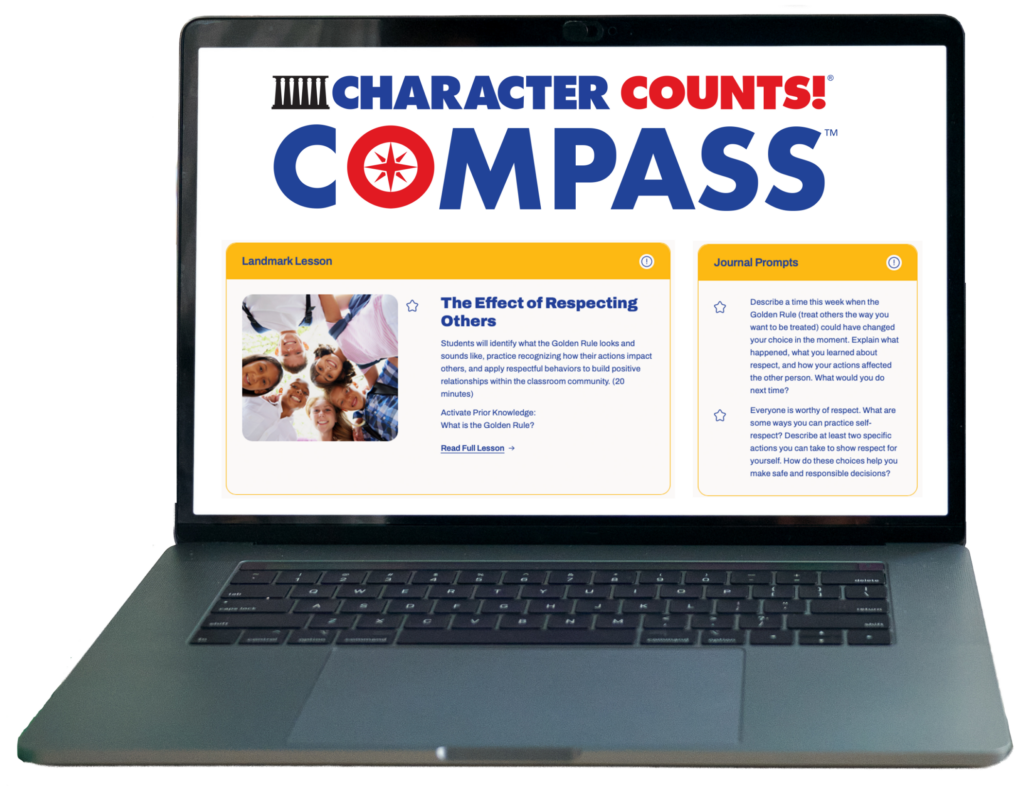
No matter where your character education journey begins, CHARACTER COUNTS!® CompassTM
gives schools the roadmap to plan, the direction to stay on track, and the pathway to lasting impact.
CHARACTER COUNTS! Compass is a comprehensive digital platform that helps K-12 schools and districts implement character education with confidence, consistency, and measurable results. Supporting every stage of implementation, CHARACTER COUNTS! Compass provides educators and administrators with everything they need in one centralized system.
Pacing with Flexibility
Our paced lessons are designed to support a weekly objective while giving educators the flexibility to choose the activities that work best for their students and schedules. Each resource includes companion Google Slides and can be marked as a favorite or checked off once completed.
Centralized Teaching Tools
Supporting every stage of implementation, CC! Compass provides educators and administrators with everything they need in one centralized system, including:

Landmark Lessons
These brief 15–20 minute lessons provide a meaningful learning experience through a fun and interactive activity, thoughtful group discussion, and guided journal prompts. Together, these elements help participants explore the topic, share perspectives, and reflect on how the lesson relates to their own experiences.

Discussion Prompts
Two discussion prompts, with extensions, provide real-life connections to the weekly objective. Discussion prompts help students think deeply about values, consider different perspectives, and practice expressing their ideas respectfully. While character skills can be taught directly, students develop a stronger understanding of them when they actively discuss and apply them to real-life situations.

Journal Prompts
Two journal prompts help students make a personal connection to the skills outlined in the weekly objective. Journal prompts provide students with a private opportunity to reflect on their thoughts, feelings, choices, and experiences. Writing encourages deeper self-awareness and helps students make personal connections to the character skills being taught.

Culture Shaping
The Culture Shaping section helps educators intentionally reinforce the weekly character skill through everyday interactions and classroom routines. By modeling desired behaviors, recognizing examples of the skill in action, and making character connections visible throughout the day, educators help create a positive school culture where character is practiced, celebrated, and embedded in daily experiences.

Family Connection
Families play a key role in reinforcing character lessons through everyday conversations, routines, and experiences. We’ll provide prompts and activities for families to support your learning objectives. By discussing values, modeling positive behaviors, and encouraging reflection at home, family members help children understand how character applies to real-life situations.

Quotations
Quotations communicate meaningful ideas in a memorable and concise way. A powerful quote can inspire students, encourage reflection, and help them better understand important character traits and life lessons.

Self-Assessment and Reflection
Self-assessment and reflection are important parts of character education because they help students become aware of their thoughts, choices, and actions. Character is not developed simply by learning about values such as trustworthiness, respect, responsibility, fairness, caring and good citizenship. It grows when students think about how those values apply to their own lives.
Implementation Plan
The Implementation Plan provides a step-by-step guide to building and sustaining a successful CHARACTER COUNTS! school. Schools can follow research-informed best practices, track implementation progress, and ensure that character education becomes part of the school’s culture.
Analytics
Administrators can monitor engagement, track teacher participation, and identify opportunities for additional support or professional development. These data-driven insights help school leaders measure progress and ensure that character education efforts are making a meaningful impact throughout the school community.